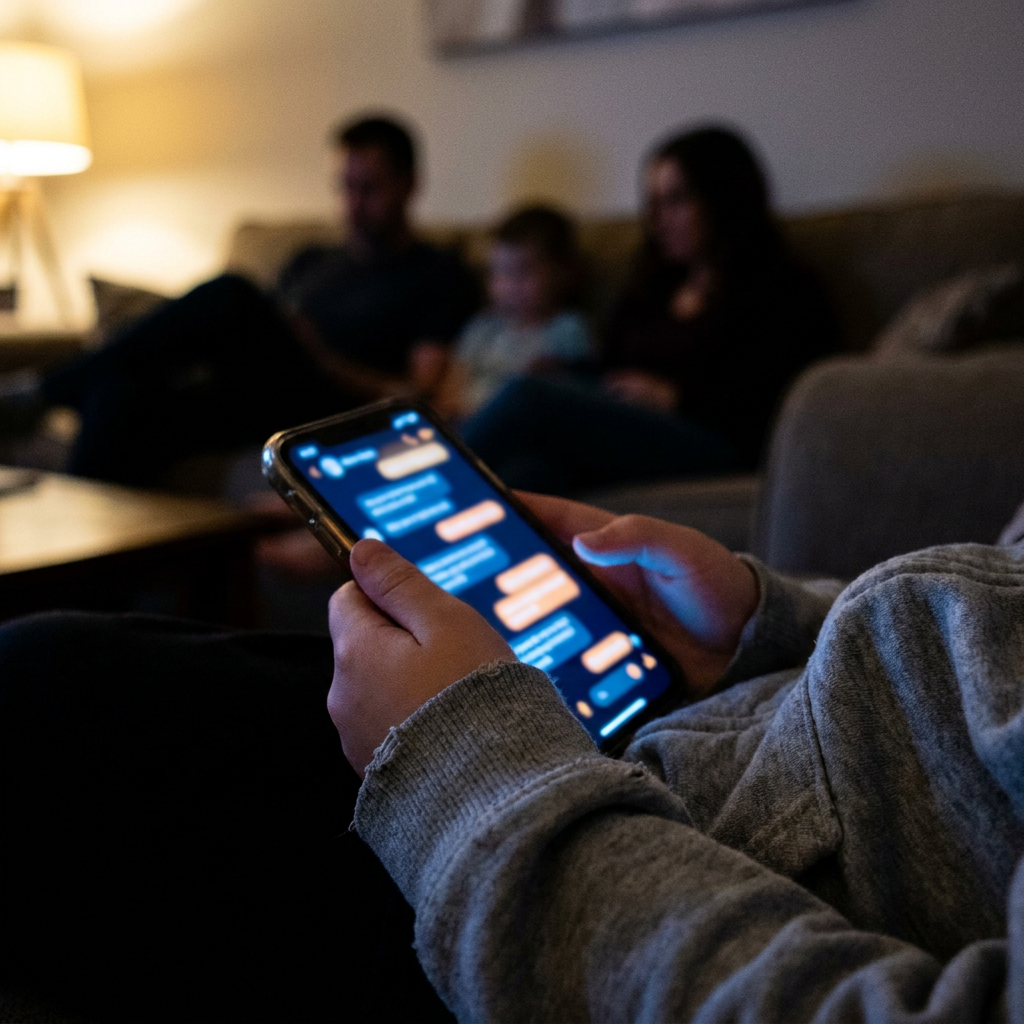
If you've noticed your child would rather text a chatbot than call a friend, you're not imagining it. A growing body of 2025 research, including coverage from the American Psychological Association, points to a real shift: kids are increasingly turning to AI companions for the kind of emotional support and casual conversation they used to get from peers.
It's easy to assume this is just another "kids and their screens" story. But psychologists studying the trend say the real issue isn't the technology itself, it's what kids are missing while they use it. Here are five signs worth paying attention to, and what's actually going on underneath them.
"There isn't that healthy struggle," says psychologist Eileen Kennedy-Moore, describing why AI companions are a poor substitute for real relationships.
American Psychological Association, October 2025They'd rather text an AI than call a friend when something's wrong
It feels safer. There's no risk of catching someone at a bad time, no risk of an awkward pause. But that ease is exactly what makes it a shortcut, not a skill. Real friendships require reading whether someone's actually free to talk, not just available.
They get frustrated when real people don't respond the way they expect
An AI adjusts to them instantly. A classmate might misread their tone, take a joke the wrong way, or need a second to understand what they meant. Kids who are used to instant, agreeable responses can find real back-and-forth surprisingly hard, not because they're bad at it, but because they haven't had to practice it.

This is the exact gap The Mehrabian Rule was built around, teaching kids to read tone, body language, and real social cues through comic-style stories, not lectures.
They avoid situations where they might be misread
A chatbot never rolls its eyes or takes something the wrong way. Real people do, and learning how to clarify, repair, and move past that moment is a skill in itself. Kids who avoid those moments altogether don't get weaker at handling them, they just never build the muscle.
Conversations with peers feel like more effort than they used to
This is the one parents notice most. It's not that their kid dislikes their friends, it's that talking to an AI takes no social effort, and now real conversation feels effortful by comparison. Twenge and Haidt's research links this shift toward "phone-based" interaction with rising loneliness, even as kids report feeling more "connected" than ever.
The gap doesn't show up now, it shows up later
This is the part that catches parents off guard. Day to day, everything looks fine. The real cost shows up years later, in a job interview, a first serious relationship, a hard conversation with a boss, after thousands of hours spent talking to something that never had a face, a tone, or a bad day of its own.
None of this means taking the technology away is the answer. Psychologists interviewed on the topic are consistent on one point: the fix isn't less AI, it's making sure kids are still getting real practice reading real people, in low-stakes ways, before it matters more.